The Folk Accessories and Tribal Artisans are Making Their Way Back to Us
The legacy of banjara art and its vibrant style, color, and stitches are a fusion of fashion with class
There are journeys we plan, and there are those that unfold as gentle surprises—whispers from the universe that guide us toward stories waiting to be heard.
It was during a serene escape to the ancient town of Hampi, cradled in the soft folds of Karnataka’s history, that I stumbled upon a story embroidered in legacy, woven in love, and stitched with the soulful quietude of a woman’s hands.
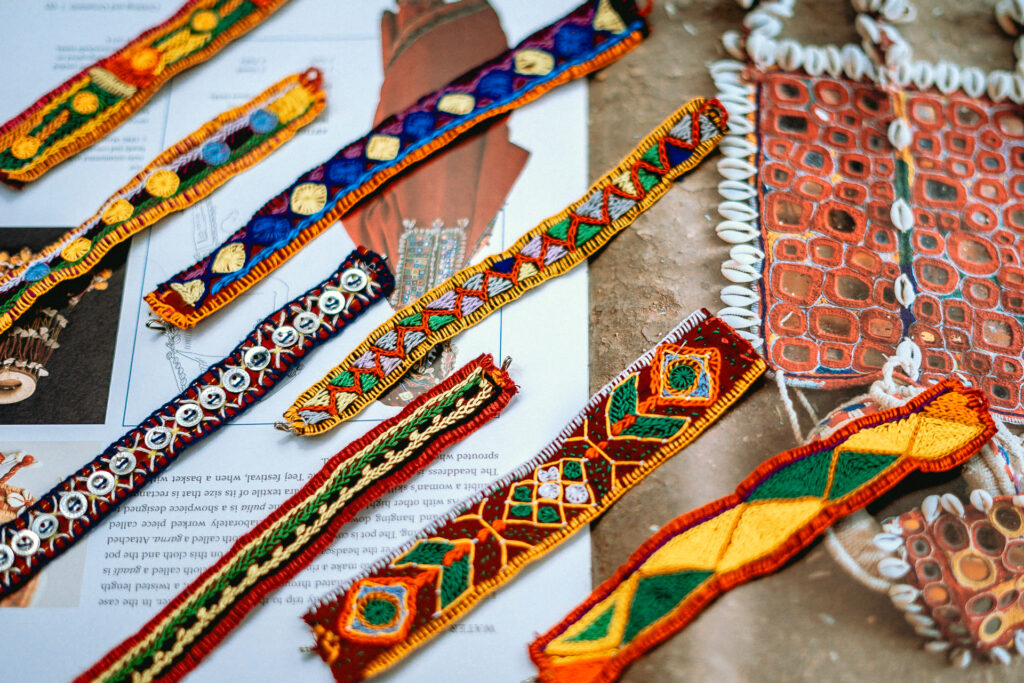
While my sister wandered into the wild with her camera to capture the poetic stillness of birds, I remained behind—content in the slow rhythm of our countryside homestay. The sun bathed the rooftop in golden light as I explored its quiet corners. There, nestled among the stone textures and open sky, I found a cascade of vivid fabrics, worn brushes, and stories half-told.
The caretaker, a graceful woman with an air of old-world charm, revealed the soul behind the colors. Her story began with a love tale — a Banjara artisan and a Portuguese painter who found in each other an unspoken language of passion and purpose. When he passed on, she carried her legacy forward with her — delicate, deliberate, and divine embroidery.
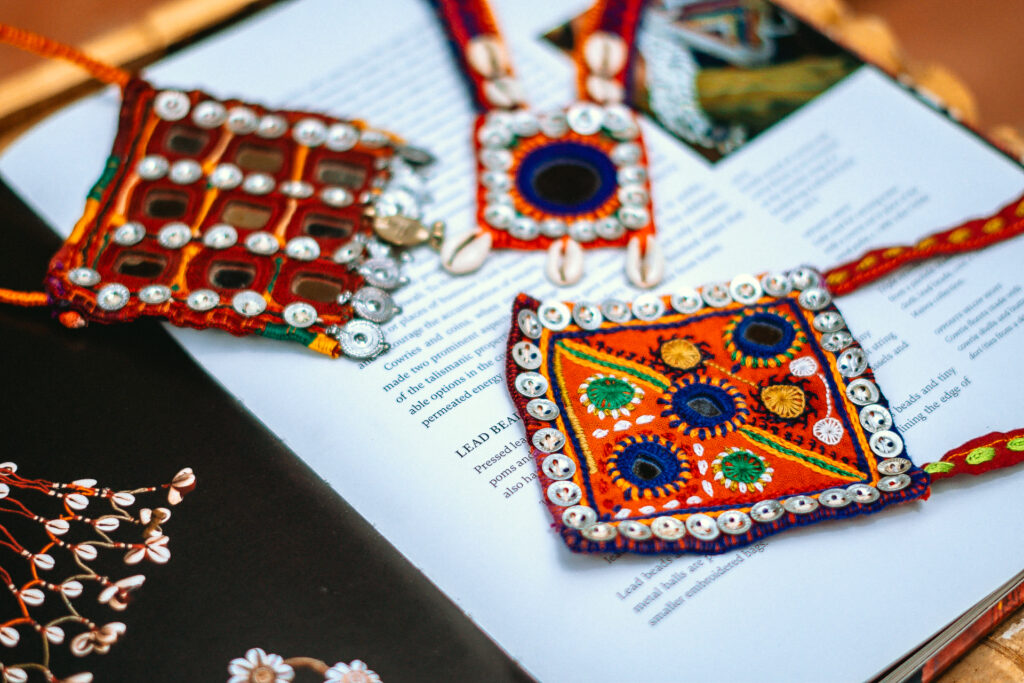
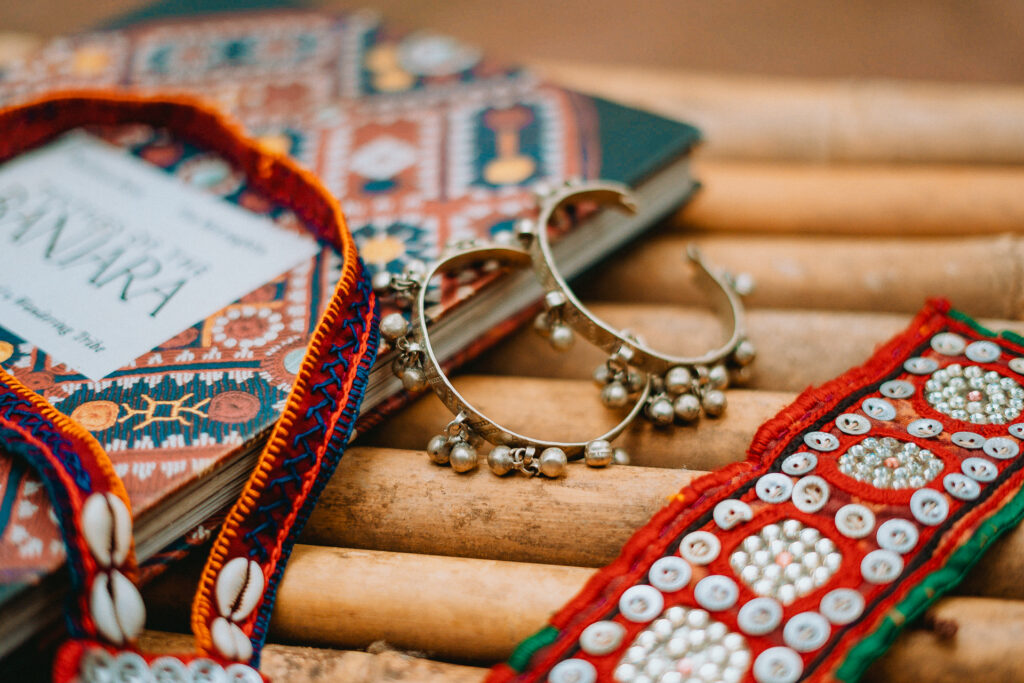
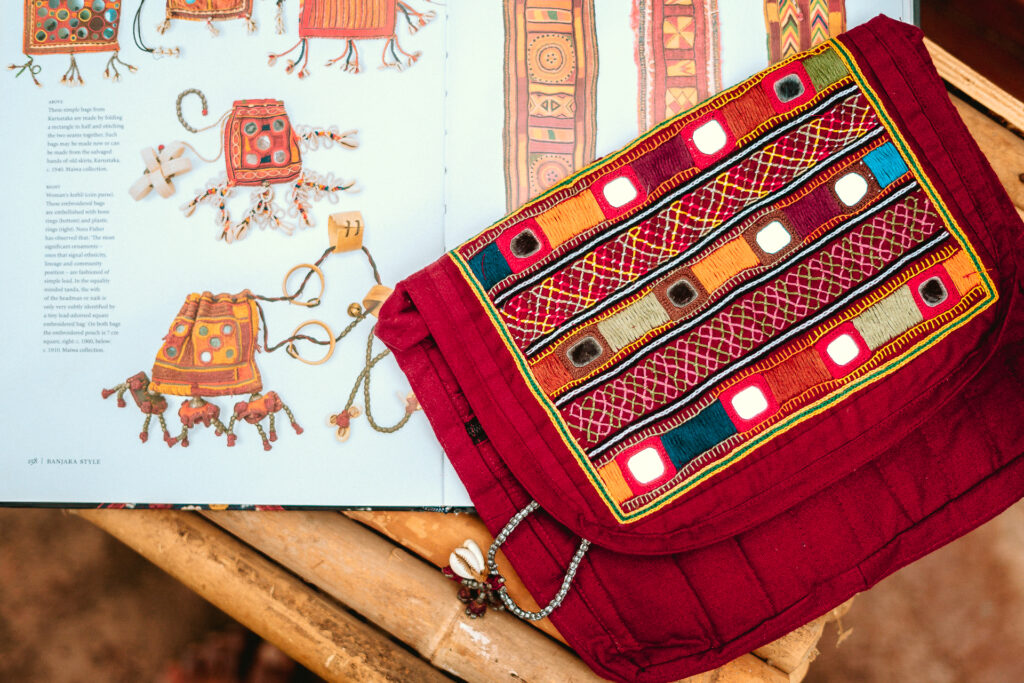
She opened a weathered trunk — her pitara—and the world inside unfolded like a quiet hymn. Mirror-worked skirts, cowry-lined necklaces, patchwork gowns, and oxidized bangles shimmered like secrets passed through generations. But it wasn’t just art; it was memory, identity, womanhood stitched into thread.
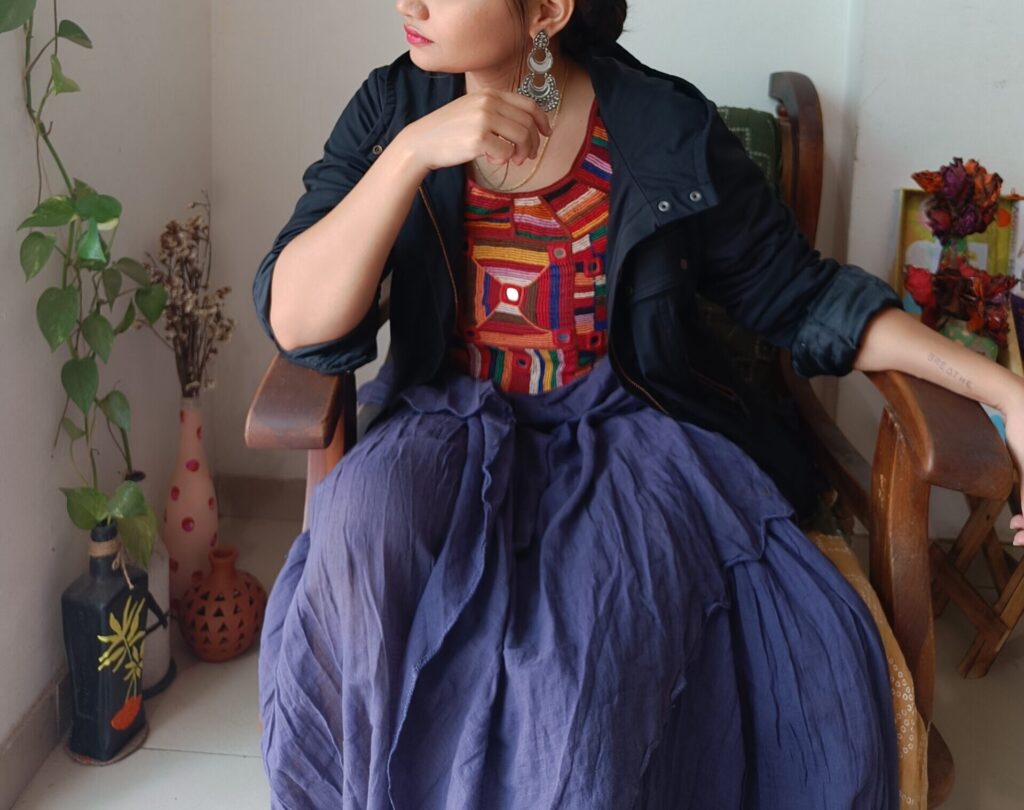
One gown caught my breath — a flowing piece, full of movement, with embroidery so fine it seemed to whisper.
“This was my grandmother’s work,” she said. “It will outlive us all—100 years, at least.”
I tried it on. And for a moment, I didn’t see myself in a mirror—I saw every woman before me who had worn strength and softness like silk on skin. That gown became mine, not because I needed more clothes, but because I longed to carry her story into my own.
Later, during Navratri, I wore the gown to a quiet gathering. I paired it with minimal makeup, a black fall jacket, a pair of boots, and heirloom silver jewelry. As I moved through the evening, it felt less like a fashion statement and more like a reverent offering—to culture, to craft, to the elegance of staying true to oneself.
Lingering in Timeless Culture
Since then, I’ve noticed a gentle wave—designers and artisans returning to the roots, elevating folk art into modern elegance. Brands like Good Earth, Anavila, and Okhai are an ode to the timelessness of Indian craft, the grace of handwoven textiles, and the forgotten beauty of ancient motifs. With every collection, they do not merely offer products; they offer stories.
At the heart of their ethos lies a deep commitment to cultural preservation—collaborating with diverse artisan communities across the subcontinent to breathe new life into heirloom techniques. Whether it’s the Real elegance of Pichwai art reimagined on silk or the hand-carved wooden statues representing People of the Forest – these brands are bridging the worlds of past and present with an elegant soul. Their work is a reminder that true luxury lies not in abundance, but in intention. In a quiet corner of life, such brands become a way of living—graceful, grounded, and profoundly meaningful.
Then there are brands like Tribe Amrapali and Teejh, who carry forward vintage silhouettes through silver and oxidized jewelry—pieces that feel like they belong in both your trousseau and your Tuesday brunch. And for the soft aesthetes among us, Gaatha and iTokri curate soulful slow fashion—hand block shrugs, reversible jackets, batik prints, all in muted, thoughtful palettes that feel like poetry in motion.
It’s comforting to see how these creators, storytellers, are not just preserving tradition, but elevating it. They are giving the everyday artisans something extraordinary: a connection, a way to wear the ancestry, a way to express luxury not through opulence, but through intention.
“We often think of style as what we wear. But true style is what we carry within us.”
When you embrace the delicate grace of tribal artistry, you are choosing to slow down, to listen and to wear stories that matter. And perhaps, in doing so, we remember who we are.